 Catholica

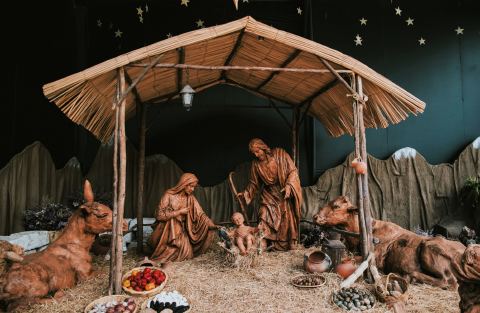
It has become quite fashionable to announce, usually with great confidence, that Jesus was not born on December 25th. Depending on who you ask, he was born in spring when the lambs arrive, in autumn during the Feast of Tabernacles, or on some date we simply cannot know at all.
So when was Jesus born? Like… really?
Let me be honest up front about what we are working with. The Gospels never tell us the date of Jesus’ birth. Neither Matthew nor Luke says it happened on such-and-such a day
. If you are hoping for a verse that settles the question, it does not exist. Anyone who tells you the Bible proves December 25th, or disproves it, is overstating the case.
But that does not mean we know nothing. Luke, a careful historian, leaves a trail of chronological clues in his first two chapters. The earliest Christians, the disciples of the apostles, left writings on the question. And modern scholarship has discovered documents that show exactly where the traditional date came from. When you lay it all out, the evidence is surprisingly strong.
Three witnesses deserve to be heard: the Bible, the early Church, and plain common sense. Let’s call them in that order.
1. The Clues Hidden In Luke’s Gospel #
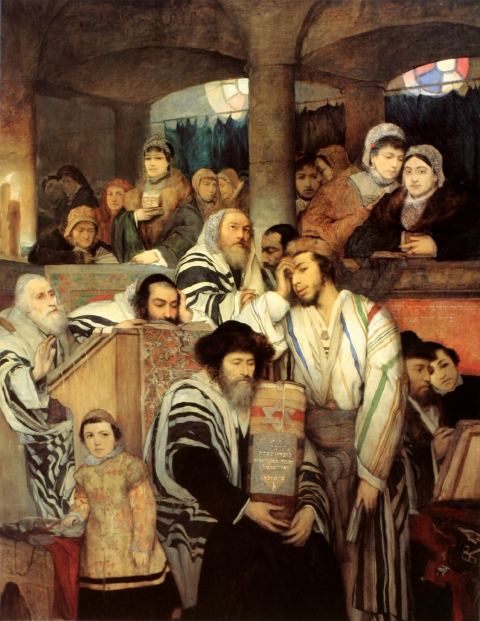
A painting from 1878 showing Jews praying during the Day of Atonement, the one day of the year when the high priest entered the Holy of Holies.
Luke begins his account not with Mary, but with Mary’s cousin Elizabeth and her husband Zachariah, a priest of the division of Abijah
(Luke 1:5). That detail, easy to skim past, is the key that unlocks the whole timeline.
King David had organised the priests into twenty-four divisions, each serving at the temple for one week twice a year (1 Chronicles 24:7-19). Abijah was the eighth division. The obvious problem for us is working out when the eighth division actually served, and here history is kind to us. Rabbinic tradition, written down about eighty years after the event, records that the division of Jehoiarib was on duty when the Romans destroyed the temple on the 9th of Av in AD 70.1 Jehoiarib was the first division, so that date gives us a fixed anchor. The Dead Sea Scrolls contain the same division names and rota, proving the system really did operate as described.2
Working backwards from that anchor, the division of Abijah was serving in the autumn, in the weeks around the festivals of the month of Tishri, roughly late September to early October. Early Christian writers worked out the same calculation long before we did. A fourth-century document called De solstitiis dates Zechariah’s service to the feasts of Tishri, a commentary ascribed to Epiphanius has him serving until the twenty-second of Tishri, and John Chrysostom preaches the same computation.3 A second-century retelling of the nativity, the Protoevangelium of James, even pictures Zacharias performing the high priest’s annual entry into the Holy of Holies, a duty the law allowed on one day only: the Day of Atonement, 10 Tishri.4
Now follow the calendar forward:
- Luke tells us Elizabeth conceived straight after Zachariah’s week of service ended (Luke 1:23-24). John the Baptist was therefore conceived around late September, which is why his conception is still marked in late September on some church calendars, and born nine months later, around late June. The feast of the Nativity of St John the Baptist is kept on June 24th to this day.
- Luke then tells us the angel Gabriel visited Mary
in the sixth month
, that is, the sixth month of Elizabeth’s pregnancy (Luke 1:26, 36). Six months after late September is late March, which is why the Church has celebrated the Annunciation on March 25th for as long as records reach. - Nine months after late March brings us to late December.
Notice what that produces: John conceived near the autumn equinox, born near the summer solstice. Jesus conceived near the spring equinox, born near the winter solstice. December 25th.
There is one more piece of quiet consistency. Forty days after a boy’s birth, the law required his presentation at the temple (Leviticus 12). Add forty days to December 25th and you land on February 2nd, the feast of the Presentation, which Christians have kept since ancient times. The whole calendar clicks together like tumblers in a lock.
I should be honest about the limits here. The priestly divisions served twice a year, and scholars who reconstruct the rota differ over the details by a few weeks. The calculation narrows the birth of Jesus to the December-January window rather than nailing the exact day on its own. For the specific day, we need our second witness.
2. What The Early Church Actually Said #
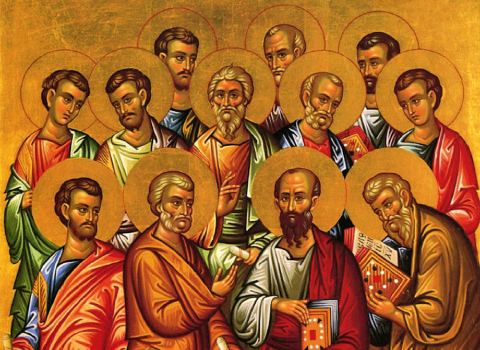
The Church Fathers were the successors of the apostles. When they agree on a detail this specific, it deserves a hearing.
Here is something the sceptics rarely mention: Christians were already arguing about the date of Jesus’ birth by about AD 200, long before anyone had legalised Christianity, let alone invented a pagan excuse for a feast.
Around AD 200, Clement of Alexandria reports that there are those who have determined not only the year of our Lord’s birth, but also the day
, and lists the suggestions then in circulation: the 25th of the Egyptian month Pachon (our May 20th), and the 24th or 25th of Pharmouthi (April 19th or 20th).5 Note what this tells us: the question was already being asked, and debated, within a century and a half of the event.
A few years later, around AD 204, Hippolytus of Rome, a disciple of St Irenaeus, wrote in his Commentary on Daniel: For the first advent of our Lord in the flesh, when he was born in Bethlehem, was eight days before the kalends of January, a Wednesday.
6 Eight days before the kalends of January is December 25th. In fairness, this is debated: the phrase is missing from some discussions of the oldest manuscript, and a few scholars suspect it was added later, though its most recent translator defends it.7 Either way, it is by no means the only early witness.
In AD 243, an anonymous North African writer (the treatise De pascha computus, once attributed to St Cyprian) was already reasoning about the birth of Christ using Malachi’s prophecy of the sun of righteousness
(Malachi 4:2). That is thirty-one years before the pagan sun festival usually blamed for Christmas even existed.
The first unambiguous record of the feast itself comes from Rome. The Chronograph of 354, a Roman almanac, contains a martyrs’ calendar whose earliest layer dates to AD 336. Its very first entry reads: eight days before the kalends of January, Christ was born in Bethlehem of Judea.
8 The calendar runs from December 25th to December 25th; at Rome, Christmas opened the church year.
And here is a detail I find genuinely hard to explain away. Around AD 400, St Augustine mentions that the Donatists, a breakaway African sect who had separated from the Catholic Church in 311 and refused every innovation that came after, did not join in the newer feast of Epiphany on January 6th. Yet they never rejected Christmas on December 25th; Augustine takes their keeping it for granted.9 For the Donatists to have kept December 25th, the feast must already have been established in North Africa before their schism, that is, before AD 311 and before Constantine. A fourth-century Latin tractate called De solstitiis spells out the whole reasoning in writing: Zechariah’s service at the feasts of Tishri, John conceived at the autumn equinox and born at the summer solstice, Jesus conceived at the spring equinox and born at the winter solstice, December 25th.10
In AD 386 St John Chrysostom preached a Christmas sermon at Antioch in which he remarks that the feast had been known in his city not yet ten years
, but had long been kept in the West, celebrated, he says, from Thrace all the way to Cadiz, the western edge of Spain.11 In other words, December 25th was already old in some places while still new in others, the signature of a tradition spreading outward, not being invented.
Other witnesses keep stacking up:
- The Apostolic Constitutions (c. AD 380) instruct Christians to celebrate the nativity on the twenty-fifth day of the ninth month: December 25th.12
- St Augustine, in De Trinitate, explains the maths openly:
He is believed to have been conceived on the 25th of March, upon which day also he suffered… but he was born, according to tradition, upon December the 25th.
13 - Pope St Leo the Great preached his Christmas sermons on December 25th in the 440s and actually complains about Christians who still bowed to the rising sun that morning, hardly the behaviour of a church that had borrowed the date from sun-worshippers.14
- A Christmas sermon preached at Bethlehem around AD 410, long attributed to St Jerome, says the tradition of December 25th came down from the apostles.15
And in the East? The eastern churches held January 6th, a date St Epiphanius still records for the nativity in the 370s (he calls it the eighth day before the Ides of January
, thirteen days after the solstice), and the Armenian Church celebrates Christmas on January 6th to this day.16 Two dates, one origin, as we will see next. Even the Syriac tradition agrees: St Ephrem the Syrian sings that the Lord descended and dwelt in the womb of Mary
in the spring month of Nisan, which pushes the birth into mid-winter.17
So the consensus by the fourth century: December 25th in the West, January 6th in the East, both reaching back into the third century at the latest, and both built on the same reasoning. Notice also what is absent. No ancient writer proposes September, October, spring or summer as the actual birthday. None.
3. Where December 25th Actually Came From #
So why those two dates, December 25th and January 6th? Because the early Christians shared a belief that sounds odd to us but was entirely natural to them.
Ancient Jewish tradition held that the great figures of salvation lived whole
years: the rabbis taught that the patriarchs were born and died in the same month, and that Moses died on the very day of his birth.18 Early Christians applied the same instinct to Jesus. They dated his crucifixion to March 25th (Tertullian and the paschal table of Hippolytus both use it), and reasoned that the greatest of all lives must have been complete at both ends: the day he died must also be the day he was conceived. March 25th, the Annunciation. Nine months later, December 25th, Christmas.19
The eastern churches ran the identical calculation on a different calendar. They dated the passion to April 6th, so the conception fell on April 6th and the birth nine months later, on January 6th. Same logic, shifted twelve days.
In 1889 the French liturgical scholar Louis Duchesne proposed exactly this explanation, that the Church calculated the birthday rather than borrowing it, and the discovery of the De solstitiis tractate proved the calculation really was being done in the early centuries. Modern scholars like Thomas Talley, William Tighe, Andrew McGowan and Thomas Schmidt have built on that work, and the resulting picture is this: December 25th emerged from Christians thinking hard about the dates in their own Scriptures, not from Christians raiding someone else’s holiday.20
4. “Christmas Is Just A Pagan Festival”, Examined #
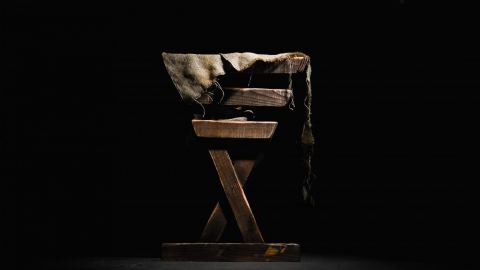
And she gave birth to a son, her first-born. She wrapped him in swaddling clothes and laid him in a manger…
(Luke 2:7a)
Now for the objection everyone knows: December 25th was copied from the pagans.
Take the two candidates one at a time. Saturnalia, the famous Roman festival, ran from December 17th to 23rd. Wrong date. Natalis Solis Invicti, the birthday of the Unconquered Sun, was indeed kept on December 25th, but it was instituted by the emperor Aurelian in AD 274. Compare the dates: Clement was reporting Christian date-proposals around 200, De pascha computus was reasoning about the nativity in 243, and the Donatists were keeping December 25th before 311. Christians had been circling that date for generations before Aurelian’s festival began, and they belonged to a persecuted minority that was notably suspicious of pagan holidays.
Historian William Tighe draws the obvious conclusion the other way around: Aurelian, who was hostile to Christianity and trying to unify his collapsing empire around a revived sun cult, most likely planted his festival on December 25th precisely because the date already mattered to Roman Christians.21 Whether or not you buy that, the chronology is a stubborn fact: the pagan festival on December 25th is later than the earliest Christian interest in the date.
And what do the early Christians themselves say? Nothing about borrowing, ever. No ancient writer explains Christmas as a takeover of the sun feast. The first time that claim appears anywhere is a note scribbled in the margin of a Syriac manuscript in the twelfth century, over 800 years after the fact, claiming the nativity had been moved from January 6th to December 25th to upstage the pagans.22 Meanwhile Pope Leo was still preaching against sun-worship happening at dawn on Christmas morning. If the feast had been borrowed to replace the festival, you would expect someone to have mentioned it. Nobody does.
To be fair, plenty of modern scholars still think some mutual influence happened later, once both festivals shared the calendar. That is possible. But it is a very different claim from Christmas was invented to replace a pagan festival
, which the evidence simply does not support.
5. The Everyday Objections #
Two practical objections get raised against a December birth, and both are worth checking because this is where common sense earns its keep.
Shepherds would not have been out in the fields in December.
Luke says the shepherds were keeping watch over their flock by night
(Luke 2:8), and sceptics reply that Judean winters are too cold for that. Two answers. First, the weather: December days around Bethlehem average roughly 13-15°C, cool but far from snowbound, and winter is actually the grazing season, since the winter rains are what make the hillsides green. Second, and more interesting: the Mishnah records that the flocks pastured in the stretch between Jerusalem and Migdal Eder, the tower of the flock
on the road near Bethlehem (Genesis 35:21, Micah 4:8), were reserved for the temple sacrifices, and they stayed out in the fields all year round, even through February.23 If the shepherds of Luke 2 were keeping temple flocks, as Alfred Edersheim argued, then sheep and shepherds in the fields in December were not just possible, they were the norm. Is this conclusive? No. But shepherds could not have been out in December
is simply wrong.
Rome would not have called a census in winter.
Why not? The Roman administration did not shut down for rain, and the ninety-mile journey from Nazareth to Bethlehem through a mild Judean winter was entirely manageable for most travellers. Neither Luke nor anyone else hints that the season made the registration impossible.
And one more honest point in the other direction: Origen notes that the earliest generations did not celebrate birthdays at all, regarding them as pagan custom.24 So nobody is claiming there were first-century Christmas parties. The claim is narrower: that Christians early on worked out when the birth happened, and later celebrated it. Those are different things, and the evidence fits the narrower claim very well.
6. The Rivals, Fairly Weighed #
Almost every alternative date you have heard falls into one of four camps.
January 6th. This is the serious runner-up. It is genuinely ancient (Epiphanius attests it for the nativity in the 370s, and Clement mentions Christians honouring it even earlier), it is still Christmas Day for Armenian Christians, and it comes out of the same family of reasoning as December 25th, just computed on the eastern calendar. If you told me Jesus was born in the first week of January I would call that entirely plausible.
September or October (the Feast of Tabernacles). The modern favourite. Its supporters argue that John tabernacled
among us (John 1:14 uses the Greek word for pitching a tent or dwelling in a booth), that festival crowds would explain the full inn at Bethlehem, and that a different reconstruction of the priestly courses can put Zachariah’s service earlier in the year, giving a September birth instead. The Revelation 12 woman clothed with the sun gets pressed into astronomical service too. These are clever arguments, and a September date is a real possibility worth respect. The weakness is historical: no Christian writer in the first several centuries proposes an autumn birth, and no church ever celebrated one.
Spring (March or April). Usually argued from lambs: shepherds watch at night during lambing. Clement reports April dates were proposed in his day, and De pascha computus placed the Incarnation in late March. The snag is that Palestinian lambs are mostly born in December and January, not April, so the best everyday argument for spring actually points backwards into mid-winter.
May, summer, and other guesses. Clement’s list already contained a May 20th proposal in the second century, and summer dates get suggested today on the strength of warm weather. Weather is the only thing these have going for them, and weather alone was never the point.
7. The Scoreboard #
Here is every serious suggestion, ranked by how much support it can actually muster:
| Rank | Proposed date | The Bible | Church Fathers | Tradition | Common sense |
|---|---|---|---|---|---|
| 1 | December 25th | ✓ | ✓ | ✓ | ✓ |
| 2 | January 6th | ✓ | ✓ | ✓ | ✓ |
| 3 | September/October (Tabernacles) | ✓ | ✗ | ✗ | ✓ |
| 4 | March/April (spring) | ✗ | ✓ | ✗ | ✗ |
| 5 | May 20th (25 Pachon) | ✗ | ✓ | ✗ | ✗ |
| 6 | Summer (June-August) | ✗ | ✗ | ✗ | ✓ |
A quick explanation of the ticks and crosses:
- The Bible: does Scripture’s chronology support it? December and January both fit Luke’s six-month interval once Zachariah’s course is anchored. A September date requires re-anchoring the courses differently, which is possible but contested, so it earns a qualified tick. Spring and later dates have nothing textual behind them at all.
- Church Fathers: does any early Christian writer attest it? December 25th has Hippolytus, the Chronograph of 354, the De solstitiis computation, Chrysostom, Augustine, Leo and more. January 6th has Epiphanius and the eastern tradition. The spring and May dates existed as proposals Clement heard about, so they score a weak tick. Nobody in the early Church ever proposed an autumn or summer nativity.
- Tradition: did any church actually keep it as the nativity? December 25th was the Roman and universal western date; January 6th was the eastern equivalent and is still kept by Armenians. Every other date has zero liturgical support.
- Common sense: does the proposal fit the everyday circumstances Luke describes? Winter dates pass easily once you check the climate and the temple flocks; September gets its tick for the festival-crowd logic; spring fails because its flagship argument (lambing season) gets the calendar backwards; summer is fine weather-wise but is nothing more than that.
So, When Was Jesus Born? #
Was Jesus born on December 25th? Almost certainly on December 25th, or within a very few days of it, in the late December to early January window.
The course of Abijah puts John’s conception in the autumn and therefore Jesus’ birth in mid-winter. The earliest Christians reached December 25th or January 6th by that same route and by the shared logic of a life complete from conception to cross. The feast was being kept before Constantine, before Aurelian’s sun festival appears in any record, and before anyone had thought up the pagan-copying theory. And the supposed knockout blows, cold shepherds and an impossible winter census, evaporate once you look up the weather and the Mishnah.
Could the date still be wrong? Of course. The Gospels do not name it, and honest history admits its margins. But if someone asks which date has Scripture, tradition and reason all pulling in the same direction, there are only two serious answers, December 25th and January 6th, and the first edges it on broader church father support. The Church did not pick a convenient pagan day. She seems to have remembered the real one.
And that, in the end, is the only claim worth making anyway: not we celebrate December 25th because it is provably his birthday
, but we celebrate on December 25th because the Word became flesh, and dwelt among us
. The day serves the mystery, not the other way around.
Sources: #
1 Mishnah, Ta’anit 4:5; Tosefta, Ta’anit 3:9; Seder Olam Rabbah 30: the course of Jehoiarib was serving when the temple was destroyed on 9 Av, AD 70.
2 Dead Sea Scrolls calendar texts (4Q320, 4Q321, the Mishmarot
), which preserve the twenty-four priestly courses and their order.
3 De solstitia et aequinoctia conceptionis et nativitatis Domini nostri Iesu Christi et Iohannis Baptistae (4th c., ed. B. Botte); Pseudo-Epiphanius, Armenian commentary on Luke (fol. 74); John Chrysostom, In diem natalem (PG 49, 358). See Talley, The Origins of the Liturgical Year (Pueblo, 1986), pp. 91-99.
4 Protoevangelium of James 8-9: Zacharias enters the Holy of Holies taking the robe with the twelve bells
, i.e. performing the high priest’s office of the Day of Atonement (cf. Leviticus 16).
5 Clement of Alexandria, Stromata 1.21 (c. AD 200).
6 Hippolytus of Rome, Commentary on Daniel 4.23.3 (c. AD 204): eight days before the kalends of January
, i.e. December 25th.
7 On the textual question see T.C. Schmidt, Calculating December 25 as the Birth of Jesus in Hippolytus’ Canon and Chronicon
, Vigiliae Christianae 69 (2015), who defends the reading against the doubts raised since Hilgenfeld (1897).
8 Chronograph of 354, Depositio Martyrum: VIII kal. Ian. natus Christus in Betleem Iudeae.
The calendar’s original layer dates to AD 336.
9 Augustine, Sermon 202 (on Epiphany): the Donatists refuse the January 6th feast but show no such scruple about December 25th, which therefore predates their schism of 311. See Talley, op. cit., pp. 86-87.
10 De solstitiis (see note 3): John conceived at the autumnal equinox and born at the summer solstice; Jesus conceived at the spring equinox (March 25th, also held to be the date of the passion) and born at the winter solstice (December 25th).
11 John Chrysostom, In diem natalem (PG 49, 351-362), preached at Antioch on December 25th, AD 386.
12 Apostolic Constitutions 5.13: the birthday which you are to celebrate on the twenty-fifth of the ninth month
(March being counted the first month, the ninth month is December).
13 Augustine, De Trinitate 4.5.
14 Leo the Great, Nativity Sermons 21-27 (esp. Sermon 22 and 27 on lingering sun-worship).
15 Homily 88 On the Nativity of Christ
, attributed to St Jerome.
16 Epiphanius, Panarion 51.22 (nativity on the eighth before the Ides of January
, i.e. January 6th); Clement, Stromata 1.21 (the Basilideans honoured January 6th); the Armenian Church keeps the nativity on January 6th to this day.
17 Ephrem the Syrian, Hymns on the Resurrection 4.10: in Nisan… he descended and dwelt in the womb of Mary.
18 Babylonian Talmud, Rosh Hashanah 11a and Kiddushin 38a; Seder Olam 10 (the righteous die on their birthdays).
19 Tertullian, Adversus Judaeos 8; Hippolytus, paschal table and Commentary on Daniel 4.23.3.
20 Louis Duchesne, Origines du culte chrétien (1889); Thomas J. Talley, The Origins of the Liturgical Year (1986); William J. Tighe, Calculating Christmas
, Touchstone (Dec 2003); Andrew McGowan, How December 25 Became Christmas
, Biblical Archaeology Review 28/6 (2002); T.C. Schmidt, Hippolytus of Rome: Commentary on Daniel and Chronicon (Gorgias, 2017); K.M. Simmons, The Origins of Christmas and the Date of Christ’s Birth
, JETS 58/2 (2015).
21 Tighe, Calculating Christmas
(see note 20); on Aurelian’s institution of the Natalis Solis Invicti on December 25th, AD 274, see the Chronograph of 354 and G.H. Halsberghe, The Cult of Sol Invictus (1972). Saturnalia: Macrobius, Saturnalia 1.10 (December 17-23).
22 Marginal gloss on a manuscript of Dionysius bar-Salibi (d. 1171); discussed and cautioned against by B. Botte, Les origines de la Noël et de l’Épiphanie (1932), p. 66.
23 Mishnah, Shekalim 7:4; Alfred Edersheim, The Life and Times of Jesus the Messiah, book II, ch. 6. Bethlehem December daytime temperatures average roughly 13-15°C.
24 Origen, Homilies on Leviticus 8.
Suggested next reading: Why A Charismatic Evangelical Joined The Catholic Church