 Catholica


Source and provenance
Letter from the Beyond), a German narrative circulating as a booklet by 1940–41 (a sixth edition appeared at Innsbruck in 1941; a Basel edition followed in 1942), edited and annotated by the Passionist theologian Fr. Bernhardin Krempel, C.P., who stated that it had previously appeared in a book of revelations and prophecies. It claims to reproduce a manuscript found among the papers of a young deceased nun: an account of a dream she had at Lake Garda in September 1937, in which her former office colleague, recently killed in a car accident, dictated to her this letter from hell. Two main families of the text circulate: the German first-person version followed here (which names Munich, calls the two women
Anniand
Klara, and ends as she wakes to the Angelus bell), and a calmer Italian–French retelling (Lettera dall’inferno, Rome 1952, and its descendants) in which the woman is called
Annette. The German edition carries an imprimatur of the diocese of Trier, 9 November 1953 (No. 4/53); the Italian an imprimatur of the Vicariate of Rome, 9 April 1952. An imprimatur certifies only that a text is free from doctrinal error; it does not authenticate the events it narrates, and this remains a reported private revelation, not defined Catholic doctrine. An earlier version of this article followed a popular English translation made from a Brazilian Portuguese edition (A Carta do Além, 1955), which introduced several mistranslations now corrected against the German, and added details (such as the letter turning to ashes) that the German text does not have. In this translation the German
Anniand
Klaraappear as Anita and Clara, the forms used in the Portuguese and Spanish versions.
The Letter from Hell #
The circumstances #
Among the papers of a nun who died young, the following account was found:
I had a friend. That is, we were close. We came from the same commercial office here in Munich, where we worked alongside each other. When Anita later married, I never saw her again. Really, there had always been more friendliness than friendship between us, so I hardly missed her when, once married, she moved to a villa quarter of Munich a long way from where I lived.
While I was spending my autumn holiday at Lake Garda in 1937, my mother wrote to me towards the end of the second week of September: Just think, Anita N. has died. She lost her life in a car accident. Yesterday she was buried in the Waldfriedhof
[the woodland cemetery]. The news gave me a fright. I knew Anita had never been properly religious. Was she prepared when God called her so suddenly?
Next morning I attended Mass for her in the chapel of the sisters’ guesthouse where I was staying, prayed fervently for her soul’s repose, and offered up my Communion for the same intention. Yet all day I felt vaguely uneasy, and it grew worse towards evening.
I slept badly. At last I woke as though to a violent pounding and turned on the light: the clock on the bedside table showed ten minutes past midnight. Nothing to be seen, not a sound in the house. Only the waves of Lake Garda lapped monotonously against the garden walls along the shore. Not a breath of wind. And yet, as I woke, I thought I had heard a sort of windy noise along with the pounding, something like the sound my boss makes at the office when he slaps a tiresome letter onto my desk in a bad mood.
I wondered for a moment whether to get up. Nonsense, I told myself firmly: It’s your overheated imagination, after that death.
I turned over, said a few Our Fathers for the Poor Souls, and fell asleep again.

And I dreamed: I had got up around six and was on my way to the house chapel when, opening my door, my foot struck a bundle of loose sheets. Picking them up, recognising Anita’s handwriting, crying out: it was all one. Trembling, I held the sheets in my hands. I knew that in this state no Our Father would cross my lips; and a suffocating feeling came over me.
I could think of nothing better than to get out into the open air. I tidied my hair a little, slipped the letter into my handbag and left the house. Outside I climbed the path that winds uphill beyond the main road, the famous Gardesana
, among olive trees, villa gardens and laurel bushes.
The morning came up radiant. Normally I drank in the glorious view every hundred paces, out over the lake and the fairytale Isola del Garda. The proverbial blue of the water refreshed me every time, and like a child gazing at its grandfather I used to marvel at grey Monte Baldo, rising slowly on the far shore from the lake’s 64-metre surface to over 2,200 metres.
Now I had no eyes for any of it. After a quarter of an hour’s walk I let myself drop mechanically onto a bench leaning against two cypresses, where only the day before I had been happily reading Federer’s Jungfer Therese. For the first time I felt those cypresses as trees of death; they had never struck me that way in the South, where they grow everywhere.
I took out the letter. No signature, but unmistakably Anita’s handwriting. Even the wide-sweeping flourish on the S and the French-formed T were there, which she had adopted at the office to annoy Mr. Gr. The style was not hers; at least, she did not speak like this. She could chat most charmingly and laugh out of blue eyes beside her cute little snub nose. Only when we argued about religious matters could she turn venomous and lapse into the hard tone of this letter. (I have now caught the whipped-up manner of her letter myself.)
Her letter from beyond I set down here word for word, as I read it in the dream. It ran:

Clara, don’t pray for me …! #
Clara! Don’t pray for me. I’m damned!
If I tell you this and go into it at length, don’t think I do it out of friendship. Here we love nobody any more. I do it as if forced, as part of that power which always wills the evil and always brings about the good
(Mephistopheles in Goethe’s Faust).
In truth I would like to see you land in the state where I have now dropped anchor for eternity.[1] Don’t be dumbfounded at that. It’s how we think here. Our will is petrified in evil (what you call evil
). Even when we do good
, as I am doing now by tearing your eyes open about hell, it isn’t done with a good intention.[2]
Do you remember? We first met in Munich four years ago. You were 23 and had been in the office six months when I joined. You often helped me out of awkward spots and gave me, the beginner, many a good tip. But what does good
mean! At the time I praised your charity
. Ridiculous! Your helping sprang from pure showing-off, as I suspected even then. Here we acknowledge no good in anyone.
Youthful years #
You know my girlhood. A few untold gaps I’ll fill in here. By my parents’ plan I was never meant to exist at all: a mishap simply befell them
. My two sisters were already 14 and 15 when I drew towards the light. If only I had never been born! Could I annihilate myself now and escape these torments! No sensual pleasure could compare with tearing my existence apart like a garment of ashes, so that its tatters flutter away into nothing.[3] But exist I must, and be as I have made myself: a life that missed its purpose.
When Father and Mother, still single, moved from the country to the city, both had lost touch with the Church, and a good thing too. They joined circles with no church ties, met at a dance, and had to
marry six months later. At the wedding only enough holy water clung to them to draw Mother to Sunday Mass a few times a year. She never really taught me to pray; she was swallowed up in everyday cares, though we were not badly off.
Words like praying, Mass, holy water, church: I write them with an inner disgust beyond compare! I detest them as I detest churchgoers, all people and all things. For everything turns to torment for us. Every insight received at our passing, every memory of things lived and known is a tongue of flame to us.[4] And every memory turns its gracious side towards us, the grace we scorned. How it tortures! We don’t eat, we don’t sleep, we don’t walk on feet. Chained in soul, we stare with weeping and gnashing of teeth
at our botched lives, hating and tormented. Do you hear! Here we drink hatred like water, even at each other.[5]
Most of all we hate God. Let me make it plain. The blessed in heaven must love Him: they gaze on Him unveiled, in His dazzling beauty, and that makes them inexpressibly happy. We know it, and the knowledge drives us mad.[6]
People on earth, who know God from creation and revelation, can love Him; nobody forces them. The believer (I write it through gritted teeth) who ponders Christ stretched upon the cross will love Him.
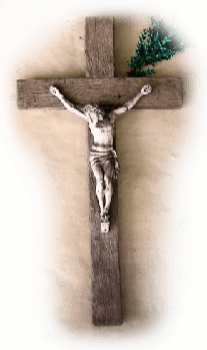 But whoever finds God drawing near only as the Punisher, the Avenger, the Just One we once rejected, in the thunderstorm as He comes to us: he hates Him[7] with the whole force of his evil will. For ever. By that free resolve to be turned from God with which we breathed out our souls in dying, a resolve we do not retract even now, and never will want to retract.
Do you see now why hell lasts for ever? Because our obstinacy never melts away!
God’s mercy towards the damned … #
I am forced to add that God is merciful even towards us. I say forced
, for though I write this letter willingly, I’m not allowed to lie as I’d like to. Much of what I put on paper is against my will, and the flood of abuse I meant to pour out I have to choke down.
God was merciful to us in that He did not let our evil will run riot on earth as freely as we were ready to let it. That would have increased our guilt and punishment. He let us die early, as in my case, or let other mitigating circumstances intervene. Now He shows us mercy by not forcing us nearer to Him than this remote corner of hell, which lessens the torment.[8] Every step nearer God would cause me more agony than a step nearer a burning pyre would you.
You were horrified when I once told you on a walk that a few days before my first Communion my father had said: Make sure, little Anita, that you get a pretty dress; the rest is all a swindle.
Your shock almost made me ashamed myself. Now I laugh about it.
The only sensible part of the swindle was that they wouldn’t let us near Communion until we were twelve. By then I was taken enough with worldly pleasures to shelve religion easily and think little of Communion. That some children now go to Communion at seven makes us furious. We do everything to persuade people children lack the understanding for it, that they must first commit a few mortal sins! Then the white Lord God (the consecrated Host) no longer hurts them the way He does while faith, hope and love (ugh!) are still alive in the child’s heart from baptism. Do you remember me holding that view already on earth?
Memory of my father #
I mentioned my father. He and Mother were often at loggerheads. I only rarely hinted at it to you; I was ashamed. Shame, ridiculous thing! Nothing matters to us here. They no longer shared a room: I slept with Mother, Father in the next chamber, where he could come home at any hour of the night. He drank a lot, and drank away everything we had. The two sisters were in service and needed their own money, so they said. Mother started earning.
In his last year Father often beat Mother when she wouldn’t give him money. To me he was always kind. One day (I told you about it, and you were cross at how spoilt I was; what were you not cross about in me!), one day he even took a pair of newly bought shoes back twice to exchange them, because the shape and heels were not modern enough for me.[9]
On the night a stroke struck my father dead, something happened that I never dared confide to you, for fear you’d read it the wrong way. Now you shall know. It’s memorable if only because it was the first time I was spoken to by my present tormenting spirit.
 I was sleeping in Mother’s room; her steady breathing gave away how deeply she slept. Then I suddenly heard myself called by name. An unknown voice said:
What if Father dies!
I no longer loved Father since he’d taken to treating Mother so roughly; not that I loved anyone even then, I only clung to a few people who were good to me. Love with no hope of earthly return lives only in souls in the state of grace, and I was none. So I answered the mysterious voice, without asking myself where it came from: But he’s not dying!
After a short pause, again the same clearly heard question. But he’s not dying!
burst out of me again, gruffly. A third time I was challenged: What if Father dies?
Before my eyes floated how Father often came home drunk, made a racket, mistreated Mother, and landed us in a wretched position in front of everyone. So I cried defiantly: Then it serves him right!
and everything went quiet.
Next morning, when Mother went to tidy Father’s room, she found the door locked. Towards noon it was broken open. Father lay half-dressed on the bed, a corpse: fetching beer in the cellar he must have caught a chill. He had been ailing for a long time.[10]
The girls’ association #
It was Martha K. and you who talked me into joining the girls’ association. Mind you, I never hid the fact that I found the instructions of the two leaders (the ladies X
) far too preachy. The games were fun, and as you know I soon claimed a leading role in them, which suited me. I liked the outings too.
I even let myself be persuaded a few times to go to confession and Communion. In truth I had nothing to confess; thoughts and words didn’t weigh on my scales, and I wasn’t far enough along for the coarser deeds. You warned me once: Anita, if you don’t pray, you’ll be lost!
I did pray little, and grudgingly at that. Now it turns out you were right. Everyone burning in hell either didn’t pray or didn’t pray enough. Prayer is the first step to God, and it stays the decisive one, especially prayer to her who was the Mother of Christ, whose name we do not speak. Devotion to her snatches countless souls from the devil, souls sin would infallibly have played into his hands.
Prayer is the easiest thing #
Furious, I go on, because I have to: praying is the easiest thing anyone can do on earth. And it’s to precisely this easiest thing that God has tied salvation. Whoever prays perseveringly He gradually gives so much light and strength that even the most mired sinner can finally rise for good, even if he were sunk up to his neck in the mud. In my last years I no longer prayed properly at all, and so robbed myself of the graces without which nobody is saved.
Here we receive no more grace. But even if we did, we would throw it back with a scornful laugh. All the wavering of earthly life ends in the beyond. You on earth can slip from the state of sin into the state of grace, and fall from grace back into sin, often through weakness, sometimes out of malice. With death, this hopping up and down that comes of earthly man’s imperfection stops for good. The final state is reached.
Even the jumps get smaller as the years mount. True enough, up to death a person can turn to God or turn his back on Him. But almost inevitably, with those last trembling stirrings of the will before passing, he decides as he was used to doing in life. Good or bad habit becomes second nature, and that is what carries him off.
So it was with me. I had lived for years turned away from God, and at the last call of grace I decided against Him. It wasn’t sinning often that undid me; it was refusing to get up again.
 You urged me several times to listen to sermons and read pious books.
I can’t find the time
was my regular answer; was I supposed to make my inner uncertainty worse?
I should add this: once things had gone as far as they had (just before I left the girls’ association), it would have been monstrously hard for me to take another road. I felt insecure and unhappy, but a wall loomed before conversion. You can’t have seen that. You pictured it so simply when you once said: Just make a good confession, Anita, and all will be well again!
I had an inkling it was so. But world, devil and flesh already held me too fast in their claws.
I never believed in the devil’s influence #
I never believed in the devil’s influence. Now I testify that he powerfully influences people like the one I was then. Only many prayers of others and my own, together with sacrifice and suffering, could have torn me from him, and even then only gradually. If outwardly possessed people are few, the inwardly possessed are legion. The devil can’t rob the free will of those who give themselves to his influence; but to punish what amounts to a fundamental apostasy from God, God allows the Evil One to nest inside them.
I hate the devil too, and yet he pleases me, because he seeks to ruin you, he and his henchmen, the spirits who fell with him at the beginning of time. They number in the millions, swarming over the earth thick as midges, and you hardly suspect it.[11] We reprobate humans are not the ones to tempt you; that falls to the fallen spirits.[12] True, their torment increases every time they drag a human soul down to hell, but what does hatred not do![13]
Even though I walked paths far from God, God followed after me. I levelled the road for grace by acts of natural kindness, which I performed fairly often by natural inclination. Now and then God drew me into a church, and I felt something like homesickness. When I nursed my ailing mother, despite office work by day, and really did sacrifice myself a little, God’s enticements worked powerfully. Once, in the hospital church where you used to take me at midday, it overcame me so completely that I was only a step away from conversion. I wept. But then worldly joy flooded back over grace: the wheat was choked in the thorns.
With the stock explanation that religion was a matter of feeling, as they always said at work, I swept this renewal of grace under the carpet like the rest.
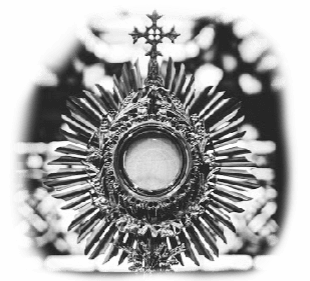 You once told me off because, instead of a genuflection to the ground, I made only a shapeless curtsey; you took it for laziness, seemingly not suspecting that even then I no longer believed in Christ’s presence in the Sacrament. Now I believe in it, but purely naturally, the way one believes in a thunderstorm whose effects one feels.
I had fashioned a religion for myself #
Meanwhile I had pieced together a religion of my own. I held to the view current at our workplace, that after death the soul rises again in another being, and so wanders on endlessly (reincarnation). With that, the uneasy question of the beyond was tidied away and made harmless.
Why didn’t you remind me of the parable of the rich feaster and poor Lazarus, whom Christ the narrator has go straight after death, one to hell, the other to paradise? But what would you have achieved? No more than with your other sanctimonious talk. (Luke 16:19)
Bit by bit I knocked together a god of my own: enough of one to be called God
, far enough away that I needn’t have dealings with him, vague enough to stretch into a pantheist world-god
or shrink into a deist old bachelor
as required, all without changing my religion.
This god
had no heaven to give me and no hell to deal out. I left him alone; that was the whole of my worship. What one loves, one gladly believes!
Over the years I grew fairly convinced of my religion. You could live with it. Only one thing would have broken its neck: a deep, long suffering. And that suffering never came! Now do you see what it means: Whom God loves, He chastises
?
… Stealing the girlfriend’s beau #
It was a summer’s day in July when the girls’ association organised an outing to A. The outing would have suited me well enough, but the stupid chatter and the pious carry-on! For some time, an image other than the Gracious Mother of A. had stood on the altar
of my heart: the dashing Max N. from the department store next door. Shortly before, we had flirted together a few times, and for that very Sunday he had invited me out; the girl he usually went out with was in hospital.
He had surely noticed I had my eye on him. I wasn’t thinking of marrying him then. He was well off, but for my taste too friendly with every girl in sight. And at that stage I still wanted a man who belonged to me alone: to be not just a wife but the only woman. A certain natural reserve always remained mine.[14]
On that Sunday outing Max outdid himself in kindnesses; there was none of the sanctimonious talk you got on your outings. Next day at the office you reproached me for not going with you to A. I described my Sunday amusement to you.
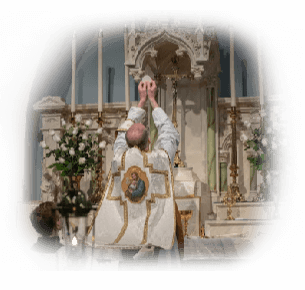 Your first question was:
Did you go to Mass?
You little fool, how could I, when the departure was set for six o’clock!
Do you remember how I irritably added: The dear God doesn’t think as small-mindedly as your parsons!
Now I have to admit: God, for all His endless goodness, is more exacting than the lot of them.
After that first outing with Max I went back to the association once more, at Christmas, for the celebration. Some things pulled me back, but inwardly I had already drifted from you. Cinema, dancing, outings, one after another. Max and I quarrelled a few times, but I always knew how to bind him to me again.
The real nuisance was my rival: back from hospital, she carried on like a madwoman. To my good luck, actually, for my dignified calm impressed Max mightily and finally tipped the scales in my favour. I had learned to run her down to him, speaking coolly, outwardly objective, inwardly spitting poison. Feelings and deeds like that prepare you splendidly for hell; they are diabolical in the best sense of the word.
Why do I tell you this? To relate how I finally got free of God. Not that things often went all the way between Max and me: I realised I would sink in his eyes if I let myself be used up before the time, so I held back. In myself, though, I was ready for anything whenever I judged it useful. I had to win Max; nothing was too costly for that. Besides, we gradually came to love each other, since we both had qualities the other could admire. I was quick, capable, good company. So I got Max well in hand, his alone, at least in those last months before the wedding.
That was my apostasy from God: raising a creature into my idol. Nowhere does it happen so completely as in love for someone of the other sex, if that love stays stuck in the earthly. That is its charm, its sting and its poison.
The adoration
I paid Max became my lived religion.
 That was the time when, at the office, I fell venomously on churchgoing, clergymen, indulgences, rosary-mumbling and suchlike rubbish. You strove, more or less cleverly, to take those things under your protection, apparently not suspecting that deep down they weren’t what it was about at all: I was looking for a prop against my conscience (I still needed one then) to justify my apostasy intellectually too.
At bottom I was revolting against God. You never saw it; you went on taking me for a Catholic. I wanted to be called one too. I even paid the church tax. A bit of back insurance
couldn’t hurt, I thought. Your answers may have hit the mark at times; they slid off me, because you weren’t allowed to be right!
With the ties between us in tatters, the pain of parting was slight when my marriage drew us apart.
Final departure from God #
Before the wedding I went to confession and Communion once more. It was simply prescribed, and my husband and I thought alike, so why not get the formality done? We dispatched it like any other formality. You call that unworthy. After that unworthy Communion
my conscience was quieter. It was the last, by the way.
Our married life ran harmoniously enough; on every point we were of pretty much the same mind, including not wanting to burden ourselves with children. At bottom my husband would have liked one (just the one, of course), but I managed to talk him out of that too. Clothes, fine furniture, tea rooms, car rides and suchlike amusements lay closer to my heart. It was one pleasurable year on earth between the wedding and my sudden death.
Every Sunday we drove out or visited my husband’s relatives (of my mother I was now ashamed), who swam on the surface of existence just as we did. Inside, though, I never felt happy, however much I laughed outside; a nameless something
always gnawed at me. I would have liked everything to be over after death, which was still a long way off, of course.
But it’s as I once heard in a sermon as a child: God rewards every good deed a person does; if He can’t repay it in the beyond, He repays it here. I unexpectedly inherited money (from Aunt Lotte), my husband managed to raise his salary considerably, and I could furnish our new flat beautifully. Religion only glimmered far off now. The coffee houses in town, the hotels we stayed in on our travels, brought us no nearer God. Everyone who frequented them lived as we did: from the outside in, not the inside out.
If we visited a famous cathedral on holiday, we went to feast on the sheer artistic value of its masterpieces. The religious aura they radiated, the medieval ones especially, I knew how to neutralise by getting annoyed at some incidental circumstance of the visit: a scruffily dressed or clumsy lay brother as our guide; the scandal
of would-be pious monks selling liqueur; the eternal jingling for services, when it was only about making money.
Hell …? #
That’s how I managed to refuse grace every time it knocked. I especially gave my scorn free rein at certain old-fashioned pictures of hell, in cemeteries or elsewhere, where the devil roasts souls in red- and white-hot heat while his long-tailed mates drag fresh victims to him.
Clara, hell can be caricatured; it cannot be exaggerated! I always took particular aim at hellfire. You know how I once held a match under your nose in a conversation about it and sneered: Does it smell like this?
You blew the flame out quickly. Here nobody blows it out.
I’m telling you: the fire the Bible speaks of doesn’t mean torment of conscience. Fire means fire
. What He said is to be taken literally: Depart from Me, you accursed, into the eternal fire!
Literally!

How can spirit be touched by material fire?
you ask. How does your soul suffer on earth when you hold your finger in a flame? It isn’t the soul that burns, yet what agony the whole person feels! In the same way we are bound in soul to the fire here, in our being and in our faculties. Our soul is robbed of its natural wing-beat: we cannot think what we will, nor as we will.[15]
Don’t stare stupidly at these lines; this state, which means nothing to you, scorches me without consuming me. Our greatest torment is knowing for certain that we shall never see God. How can that torture, when on earth it left one so indifferent? While the knife lies on the table it leaves you cold: you see its sharpness, you don’t feel it. But stick the knife in your flesh and you scream with pain. Now we feel God’s loss; before, we only saw it.[16]
Not all souls suffer alike. The more maliciously and deliberately someone sinned, the heavier God’s loss weighs on him, the more the misused creature throttles him. The damned Catholics suffer more than non-Catholics, because they mostly received more light and grace and trampled it. Whoever knew more suffers harder than whoever recognised less; whoever sinned out of malice suffers more keenly than whoever fell out of weakness. But nobody suffers more than he has deserved. Oh, if only that weren’t true, so that I might have a reason to hate!
You once told me that nobody goes to hell without knowing it; it had been revealed to a saint, you said. I laughed at that, but then I dug myself in behind the explanation all the same: there’d still be time enough to change course if need be, I told myself quietly.
The saying holds. Before my sudden end I didn’t know hell as it is; no earthling knows it. But I was perfectly aware: if you die, you pass into the beyond against God, and you bear the consequences. I didn’t turn back, as I said, carried onward by habit, by that sameness with which people act more and more as they grow older.
My death … #

My death happened like this. A week ago it was (I speak by your reckoning, for measured by the pain I could just as well have been burning in hell for ten years), a week ago, then, my husband and I went on what was to be my last Sunday outing. The day had dawned radiant; I felt well as rarely, and an eerie feeling of happiness trickled through me. Then suddenly, on the drive home, my husband was blinded by a car rushing towards us and lost control.
Jessses (= Jesus!)
, it flashed through me. Not as a prayer, only as a scream. A crushed pain pressed in on me, a trifle compared with my present torments. Then everything went black.
Strange, that very morning a thought had risen in me out of nowhere: you could go to Mass again for once. It sounded like a plea. Clear and firm, my No
cut the thread of that thought: This has to end once and for all. I’ll take all the consequences upon myself.
Now I bear them.
What happened after my death, you will know. My husband’s fate, my mother’s, what befell my corpse and the course of my burial are known to me in detail through the natural knowledge we have here. Whatever else goes on on earth we know only dimly, but whatever somehow closely concerned us, we know, so I can also see your whereabouts.[17]
I myself awoke at the moment of my passing, abruptly, out of darkness, and saw myself as though flooded in glaring light. I was in the same place where my corpse lay. It happened as in a theatre when the lights in the hall suddenly go out and the curtain rushes apart: eerily lit, an undreamt-of scenery opens up. The scenery of my life. As in a mirror my soul showed itself to me: the trampled graces from youth on, down to the last No
to God.
I felt like a murderer whose lifeless victim is produced in the courtroom. Repent[18]? Be ashamed?! Never! But neither could I bear it under the eyes of the God I had rejected. Only one thing remained: flight. As Cain fled from Abel’s corpse, something tore my soul away from that sight of horror. That was the particular judgement! The invisible Judge spoke: Depart!
Then my soul plunged like a sulphur-yellow shadow down to the place of eternal torment.
After the end of the letter … #
So ended Anita’s letter. The last words were almost illegible. Then, what was that? Into the harsh accent of the lines I had been reading, a bell sounded softly.
 I started up. I was still lying in my room. The first light was looking in at the window, and the Angelus ringing carried over from the parish church.
So it had all been only a dream? Never had I felt the comfort of the Angelic Salutation
as I did after that dream. Slowly I said the three Aves. Then it became quite clear to me: to her you must cling, to the blessed Mother of the Lord; honour Mary like a child, if you don’t want to suffer the lot that a soul described to you, albeit only in a dream, who will never see God.
Still trembling from that terrible night, I got up, dressed hastily and hurried downstairs to the house chapel. My heart was pounding up into my throat. The few guests kneeling nearest looked at me, but they probably thought I seemed so heated
only because I’d run down the stairs.
A kind elderly lady from Budapest (tried by suffering, frail as a child, short-sighted but earnest in God’s service and far-sighted in spiritual things) smiled at me that afternoon in the garden: Miss, the Saviour does not want to be served on the express train.
But she saw at once that something else had shaken me and still had hold of me, and gently she added: Nothing should frighten you; you know the little verse of Saint Teresa? Nothing dismay you; all things pass; God stays the same; patience gains all; whoever has God can lack nothing; God alone suffices!
While she read it to me and whispered it, with nothing preachy about her at all, it was as if she were reading my soul.
God alone suffices!
Yes, He shall be enough for me, here below and over there. I want to possess Him there one day, however many sacrifices it costs here. I want to come through the trials of earthly life holding fast to God’s love, so that I may possess Him for ever, Him who alone is peace, joy and happiness, while all earthly joys pass away.
Editor’s note #
The question forces itself on one irresistibly: how could Clara remember all the words of the damned woman so exactly? The answer may be: He who makes the pot makes the lid too
: whoever begins a work also finishes it. If apparitions from the beyond are a supernatural fact, then Clara will also have had supernatural help to take down every word of the vision exactly.
Footnotes: #
1. Cf. St. Thomas Aquinas, Summa Theologica, Supplement, q. 98, a. 4: The damned wish that all good people were damned.
↑
2. Cf. Summa Theologica, Supplement, q. 98, a. 1: Their own deliberate will is in them wholly evil.
↑
3. Cf. Summa Theologica, Supplement, q. 98, a. 3, ad 3: Insofar as non-being frees one from a punished or miserable life, it would mean a greater good for the damned than their miserable existence… and so they wish for non-being.
↑
4. Cf. Summa Theologica, Supplement, q. 98, a. 7: There is nothing in the damned that is not for them matter and cause of sorrow… as when they turn their attention to what they knew.
↑
5. Cf. Summa Theologica, Supplement, q. 98, a. 4: In the damned there is perfect hatred.
↑
6. Cf. Summa Theologica, Supplement, q. 98, a. 9: Before the day of the general judgement it is made known to the damned that the blessed are in an inexpressible glory.
↑
7. Cf. Summa Theologica, Supplement, q. 98, a. 8, ad 1 and ad 5: The damned see in God only the Punisher and the Preventer of the evil they still wish to do. Because they see Him only in the punishment, the effect of His justice, they hate Him.
↑
8. Cf. Summa Theologica, I, q. 21, a. 4, ad 1: In the damnation of the reprobate God’s mercy appears… in that He punishes them less than they deserve.
Elsewhere the holy Doctor adds that this is especially so for those who on earth were merciful towards others (Summa Theologica, Supplement, q. 99, a. 5, ad 1). ↑
9. Editor’s note: the foregoing traits concerning Anita’s father, and the incident that follows, are facts. ↑
10. Editor’s note: would God, then, have made it depend on the will of a child (to whom the man had, after all, been somewhat good) whether He would grant him a longer opportunity for conversion? ↑
11. The influence of the evil spirits is summed up under the expression the devil
. As proof of his existence, two passages of Holy Scripture suffice, which are perhaps too little pondered. (a) 1 Peter 5:8: Brothers, be sober, be watchful! Your adversary the devil goes about like a roaring lion, seeking whom he may devour.
The roaring refers not to Satan making a great noise with his temptation, but to the greed with which he seeks to ruin us. (b) St. Paul writes to the Ephesians (Eph. 6:11ff.): Put on the armour of God, that you may be able to withstand the wiles of the devil. For our struggle is not against flesh and blood (men), but against the principalities and powers, the dark world-rulers and evil spirits in the air.
Here it is clearly stated that the Evil One assails us through countless henchmen from the various choirs of the fallen angels. The devil could not be called world-ruler
if his influence on earth were not mighty. ↑
12. Cf. Summa Theologica, Supplement, q. 98, a. 6, ad 2: It is not the business of damned men to try to ruin others, as it is the business of the devils.
↑
13. Cf. Summa Theologica, Supplement, q. 98, a. 4, ad 3: Yet they are so filled with hatred and envy that they would rather suffer more with many than suffer less alone.
↑
14. A marginal remark by Clara, Anita’s friend: That is true. For all her religious indifference, Anita had something noble in her nature. It frightens me to think that even decent
people can come to hell if they are indecent
enough to keep out of God’s way. ↑
15. Cf. Summa Theologica, Supplement, q. 70, a. 3: The fire of hell torments the spirit by preventing it from carrying out its will: it cannot act where it wills, nor as it wills.
↑
16. Cf. St. Augustine, De Civitate Dei, XXI, 4: This pain, the loss of God, is as great as God is great.
↑
17. Cf. Summa Theologica, Supplement, q. 89, a. 3: Separated souls have no sure knowledge of particulars, but only a shadowy general knowledge of the whole natural order.
And: By means of these infused ideas, separated souls can recognise only those particulars to which they are somehow directed: whether through previous knowledge, or through attachment, or through natural disposition, or through divine ordination.
(Cf. Summa Theologica, Supplement, q. 89, a. 4.) ↑
18. Cf. Summa Theologica, Supplement, q. 98, a. 2: The wicked do not properly repent of their sins, because they wilfully cling to sin.
The eternity of hell’s punishments is an article of faith, perhaps the most terrible of all. Cf. in Holy Scripture: Matt. 25:41; 2 Thess. 1:9; Jude 13; Rev. 14:11 and 20:10. All undeniable texts in which eternal
cannot be reinterpreted as long
. Were it not permissible to illustrate even this article of faith in a particular case, the divine Saviour could not have told the parable of the rich feaster and poor Lazarus (Luke 16:19) either: He depicted hell, and how one comes to it, not out of sensationalism, but to warn of the danger. ↑